A leadership team in discussion around a table
For Belgian founder-led & family businesses

International growth.
Direction before acceleration.

You went international. Growth hasn’t followed — yet. Before adding people, budget or markets, identify the real constraint and agree on what to do next.

Discuss your growth challenge →
What the research shows

Ambition is clear. The constraints deserve a closer look.

64%

of surveyed Belgian start-ups and scale-ups name market demand and sales execution as their biggest challenge.

Source: Deloitte Scale-Ups Confidence Survey 2026, Belgian respondents (n=226)
72%

identify sales funnel optimisation as their main area for improvement.

Source: Deloitte Scale-Ups Confidence Survey 2026, Belgian respondents (n=226)
17points

lower on average: young Belgian companies' organisational maturity score compared with SMEs.

Source: Deloitte / Vlerick Rising Star Monitor 2025 (n=183)

Survey populations are Belgian start-ups and scale-ups. The figures describe those respondents; they are not evidence about all family businesses, not proof of cause, and not a diagnosis of your company.

Three connected layers of cross-border friction

More activity is not always the answer.

  1. 01

    Market

    Which segments, which proposition, which funnel. What worked at home is a hypothesis abroad, not a fact.

  2. 02

    People

    Alignment between headquarters and the local team: who decides what, and how much trust the mandate really carries.

  3. 03

    Execution

    Clear owners, few priorities and a review rhythm that shows early whether the plan is working.

When growth abroad stalls, the instinct is to add: more campaigns, more meetings, more hires. More activity is not always the answer. Often the constraint sits in an unmade choice — about the segment, the mandate or the owner — and extra effort only makes it harder to see.

Perspective

Same values. Different priorities.

Speaking the same language doesn’t necessarily mean we understand each other. Drawing on sixteen years of international leadership experience across Belgium, France, the United States and the Netherlands, our founder explores how invisible cultural assumptions influence trust, strategic alignment and commercial execution — and how organisations can turn those differences into a source of competitive advantage.

Read the Perspective →
Decision architecture

From scattered effort to explicit choices.

  • Diffuse targeting across many segmentsTwo or three explicit priorities
  • Ad hoc decisions from headquartersClear local mandates and decision rights
  • Many parallel initiatives90-day owned actions with a progress rhythm

These describe the shape of the decisions we work towards, not a promised result.

Three ways to work together

Start where your question is.

Three independent entry points — not a sequence you need to complete.

A · Interactive Growth Session

A 45–60 minute session for your group.

An online webinar or in-person workshop for a founder group, leadership team or business network. The Belgium → Netherlands session draws on prepared workshop materials; for the United States path, we discuss tailoring with you first.

Each participant leaves with one growth choice, one trade-off, an owner and a 30-day proof point.

Available on request — not a scheduled event.

Request an interactive session →
B · North Star Growth Diagnostic

One day to separate the constraint from the symptoms.

Fixed fee
€3,500excl. VAT

Travel expenses are agreed separately where applicable.

  1. 01A short preparation call and the relevant commercial context.
  2. 02Confidential conversations with three to five leaders — preferably on site, online if needed.
  3. 03Afterwards, a concise Growth Decision Brief: likely constraints, trade-offs and prioritised next steps.

An independent, premium engagement — not a promise to solve growth in one day. The brief stands on its own. The right next step may be a small test, a workshop, the Sprint, another specialist or no further engagement.

Explore the Growth Diagnostic →
C · North Star Alignment Sprint

When leadership alignment is the bottleneck.

Our established, deeper engagement: two weeks to prepare, two days to align, 90 days to navigate — with check-ins at 30 and 90 days.

Explore the Sprint →

Two independent corridors

One origin. Two different sets of choices.

31%Netherlands

Belgium → Netherlands

Close by and familiar — which is exactly why differences are underestimated. Directness, decision-making, sales cycles and buyer expectations differ more than they seem.

One language. Different assumptions. Better joint decisions.

The workMake the Dutch ambition explicit, decide what to adapt rather than copy, and give the local team a clear mandate.

33%North America

Belgium → United States

A different scale, pace and cost of mistakes. Focus is the question: which segment, which region, what proof, and how much founder presence is needed.

The workChoose deliberately, set realistic milestones and protect the core business at home.

Share of Belgian respondents in the Deloitte Scale-Ups Confidence Survey 2026 selecting each as their primary expansion target. North America is a broader category than the United States. These figures are not evidence of opportunity for any specific company. Source: Deloitte Scale-Ups Confidence Survey 2026.

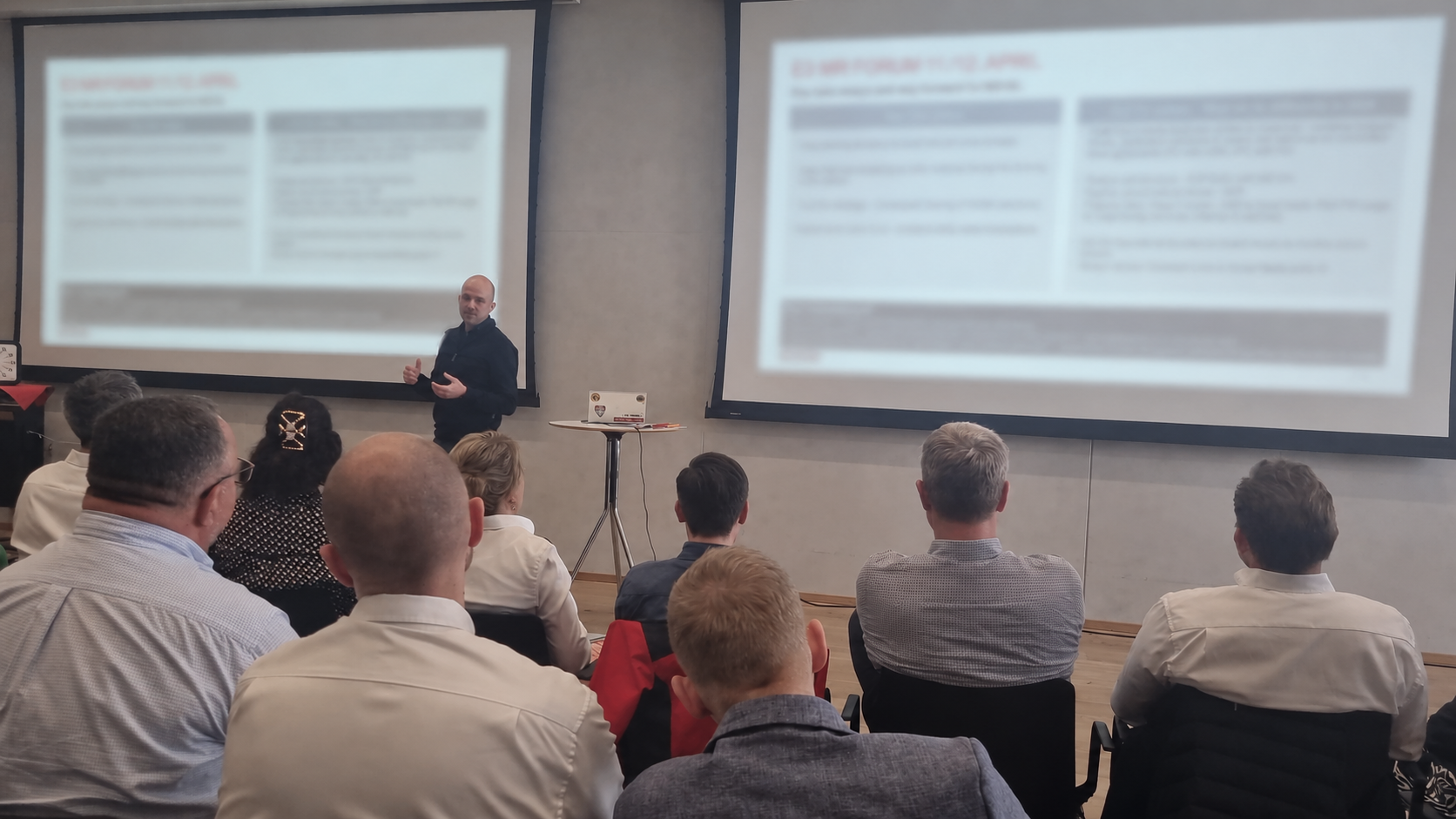
Carlo Crevels facilitating a workshop with a leadership group
Who leads the work

Carlo Crevels, founder of Your North Star. Sixteen years of international leadership at Hilti across commercial, strategy and operations roles, working in Belgium, France, the United States and the Netherlands.

Illustration: a Belgian family manufacturer opens a sales office abroad. Pipeline looks promising, revenue lags, the founder flies in for every key meeting and the local lead waits for decisions. The constraint is not the market alone — it is the absence of one shared definition of success.

About Carlo →
A realistic next step

Start with a brief conversation.

A 20–30 minute initial fit conversation about where your international growth stands. We begin by finding what kind of support is genuinely needed — which may or may not be us.